Warning: Attempt to read property "ID" on null in /home/microharmonics/domains/microharmonics.com/public_html/wp-content/plugins/premium-seo-pack/modules/title_meta_format/init.php on line 610

Warning: Attempt to read property "ID" on null in /home/microharmonics/domains/microharmonics.com/public_html/wp-content/plugins/premium-seo-pack/modules/title_meta_format/init.php on line 610

Warning: Attempt to read property "ID" on null in /home/microharmonics/domains/microharmonics.com/public_html/wp-content/plugins/premium-seo-pack/modules/title_meta_format/init.php on line 610

Warning: Attempt to read property "ID" on null in /home/microharmonics/domains/microharmonics.com/public_html/wp-content/plugins/premium-seo-pack/modules/title_meta_format/init.php on line 610

Warning: Attempt to read property "ID" on null in /home/microharmonics/domains/microharmonics.com/public_html/wp-content/plugins/premium-seo-pack/modules/title_meta_format/init.php on line 610

Warning: Attempt to read property "ID" on null in /home/microharmonics/domains/microharmonics.com/public_html/wp-content/plugins/premium-seo-pack/modules/title_meta_format/init.php on line 610

Warning: Attempt to read property "ID" on null in /home/microharmonics/domains/microharmonics.com/public_html/wp-content/plugins/premium-seo-pack/modules/title_meta_format/init.php on line 610

Orthomode Transducers: Part 2 – Architectures

Orthomode Transducers: Part 2 – Architectures

2025-05-23T06:28:37-04:00

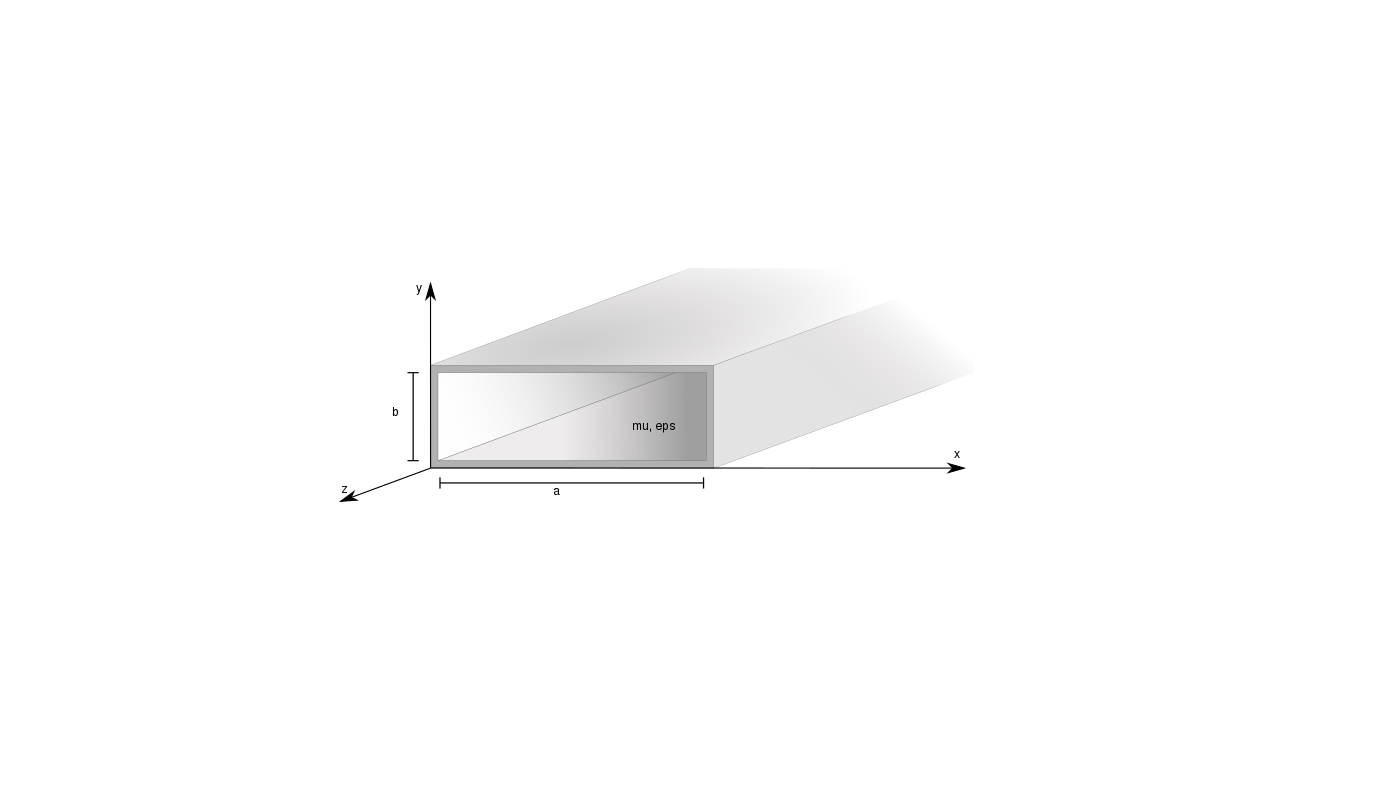
Orthomode Transducers: Part 2 – Architectures David W. Porterfield, PhD Founder, Micro Harmonics In our previous blog, "Orthomode Transducers: Part 1 – Introduction and Applications", we provided an preliminary examination of orthomode transducers (OMTs) and their applications. In this post, we will explore the OMT architecture. OMTs have three waveguide ports. Two ports support a [...]

Orthomode Transducers: Part 2 – Architectures2025-05-23T06:28:37-04:00

April 25, 2024

2025-05-08T15:29:12-04:00

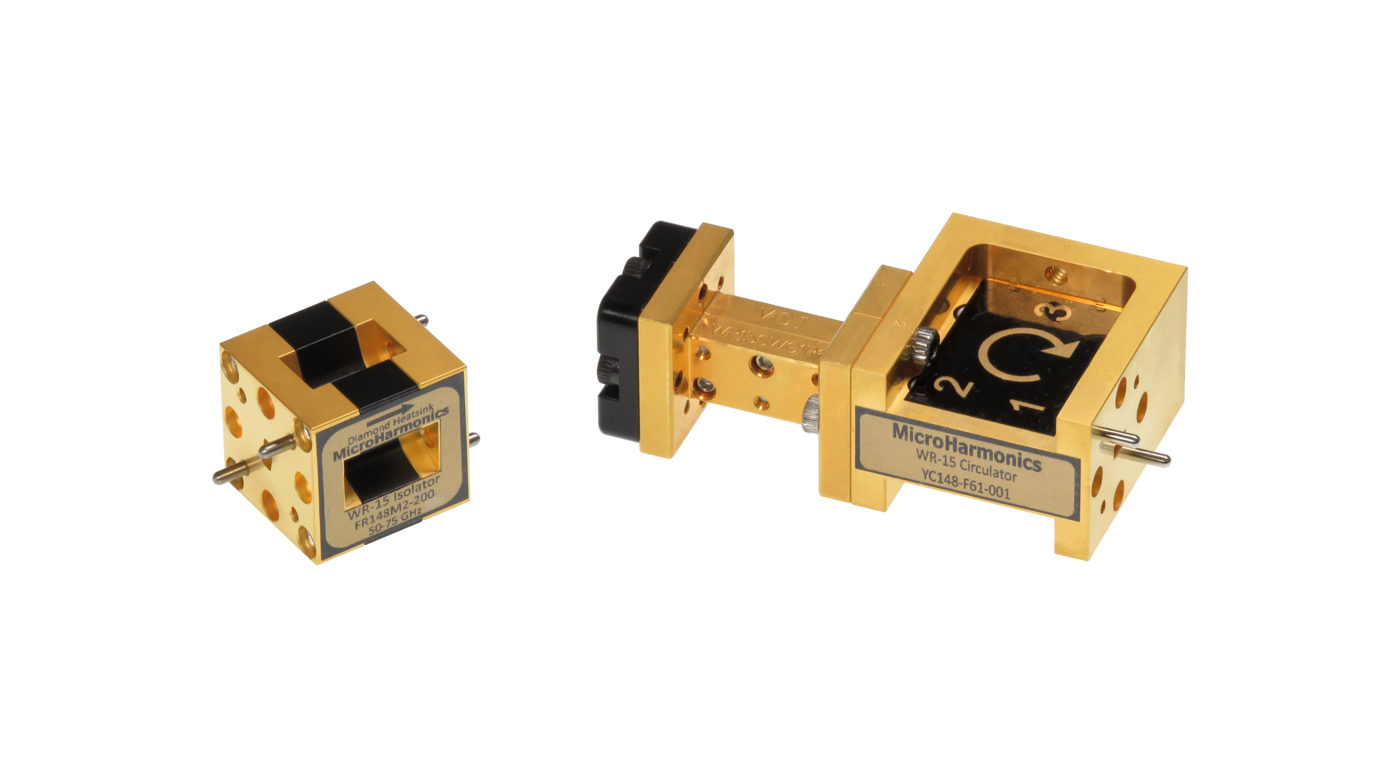
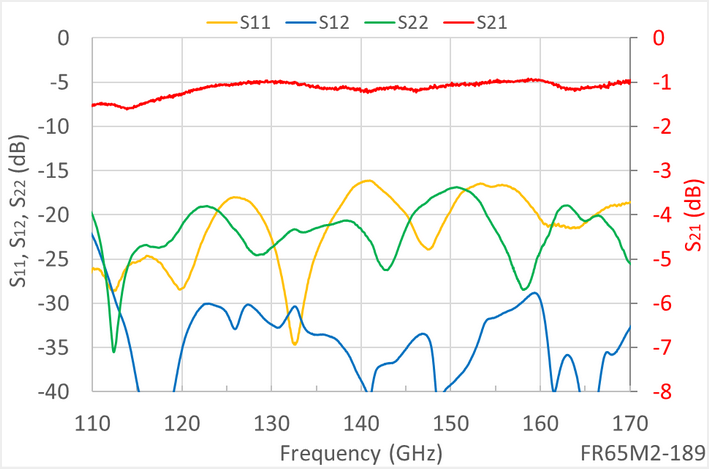
Microwave Product Digest published a story about the challenges of using isolators in MMW amplifiers. The article discusses how Micro Harmonics isolators are overcoming the notable drawback of conventional isolators. Among those mentioned in the article is the issue of insertion loss. Traditional isolators operating in the D-band (WR-6.5, 110-170 GHz) can have insertion losses [...]

April 25, 20242025-05-08T15:29:12-04:00

March 13, 2024

2025-03-13T10:29:49-04:00

Our new Faraday rotation-based attenuators are particularly well-suited for applications in telecommunications, radar systems, and test and measurement equipment operating at mm-wave frequencies. Their combination of high dynamic range, low insertion loss, and compact size makes them ideal for field use in aerospace and defense systems, where both performance and portability are critical. Read more [...]

March 13, 20242025-03-13T10:29:49-04:00

February 17, 2024

2025-02-19T11:35:09-05:00

Our new Faraday rotation attenuators were just featured in an article published in Design2Part magazine. These attenuators utilize a magnetic coil to produce a variable magnetic bias field in a ferrite rod. They offer full waveguide band operation and high-power handling compared to other technologies. Read the full story here:  

February 17, 20242025-02-19T11:35:09-05:00

Orthomode Transducers: Part 1 – Introduction and Applications

2025-01-31T18:36:40-05:00

Orthomode Transducers: Part 1 – Introduction and Applications David W. Porterfield, PhD Founder, Micro Harmonics Orthomode transducers (OMTs), also known as polarization duplexers, are waveguide components that combine or separate two orthogonally polarized signals. OMTs have three waveguide ports. Two of the ports support a single propagating mode, typically the TE10 mode in rectangular waveguide. [...]

Orthomode Transducers: Part 1 – Introduction and Applications2025-01-31T18:36:40-05:00

January 22, 2024

2025-01-27T07:36:53-05:00

When the strength or magnitude of a radio frequency (RF) signal must be reduced, attenuators are traditionally relied upon. They are especially useful for signal leveling or switching applications. At frequencies above 50 GHz, two electronically tunable variable attenuator technologies are most often employed: PIN diode and resistive vane attenuators. However, as outlined in a [...]

January 22, 20242025-01-27T07:36:53-05:00

January 7, 2024

2025-01-07T09:46:43-05:00

The move up the electromagnetic spectrum (EM) into millimeter waves (MMW) is proving to be a double-edged sword. System designers eager to leverage wider bandwidths and incredibly high data throughputs must also contend with a host of new challenges. Of amplified importance – particularly between 75-330 GHz – is the issue of attenuation. Read more [...]

January 7, 20242025-01-07T09:46:43-05:00

A mm-Wave Circulator with High Transmitter and Receiver Isolation (Part 2)

2024-12-11T18:47:58-05:00

A mm-Wave Circulator with High Transmitter and Receiver Isolation (Part 2) David W. Porterfield, Ph.D. President and Founder Micro Harmonics Corporation In last month’s blog, I showed why a triple junction circulator offers no advantage over a single junction circulator in isolating a sensitive receiver from a high-power transmitter (S31). I also showed that the [...]

A mm-Wave Circulator with High Transmitter and Receiver Isolation (Part 2)2024-12-11T18:47:58-05:00

December 12, 2024

2024-12-10T16:27:02-05:00

Electronic Products Design & Test magazine recently published an article titled, The Role of Isolators in mmWave Power Amplifiers, which discussed Micro Harmonics' new line of Faraday rotation isolators. “With exceptionally low insertion loss, the lowest by far of any isolator on the commercial market, the MHC D-band isolators have an insertion loss of less [...]

December 12, 20242024-12-10T16:27:02-05:00

November 14, 2024

2024-11-19T13:27:20-05:00

Everything RF has published a detailed story about our Faraday rotation attenuators. The article discusses the challenges engineers are facing when trying to reduce the strength or magnitude of a radio frequency at frequencies above 50 GHz. The two most common electronically tunable variable attenuator technologies, PIN diode and resistive vane attenuators, both come with [...]

November 14, 20242024-11-19T13:27:20-05:00
Go to Top